Click Here to see MORE RECENT 3 SQUADRON CONTACTS
READER CONTACTS ARCHIVE...
If you can supply further information on any of the topics below, or would like to send a message to any of our correspondents,
please *contact us at the 3 Squadron Website.Contacts from 2013/2014:
John Inger, of Sydney, has very kindly sent us a clearer version of a 1940 photo on our ‘Lysander’ page - featuring his uncle Fred Inger, who served with 3SQN in Egypt. Fred later flew Spitfires in the Pacific and had a dramatic jungle escape in Borneo in 1945, after experiencing engine-failure in his Spitfire VIII. [This was exactly the sort of needless sacrifice that the “Morotai Mutiny” protested about – and Bobby Gibbes, famous ex-CO of 3 Squadron, was leading Fred’s 457 Squadron when the Australian Govt. took revenge on the “mutineers”, including Bobby...]
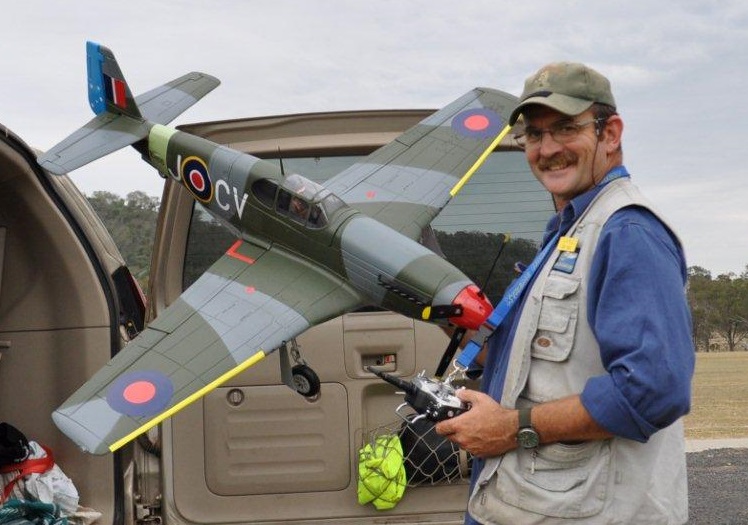
A radio-control model enthusiast named Robert Knox, who lives near Toowoomba in QLD, has sent us some nice photos of his impressive flying-models. One represents the 3SQN Mustang III (coded “CV-J”) that was shot down on Boxing Day 1944.
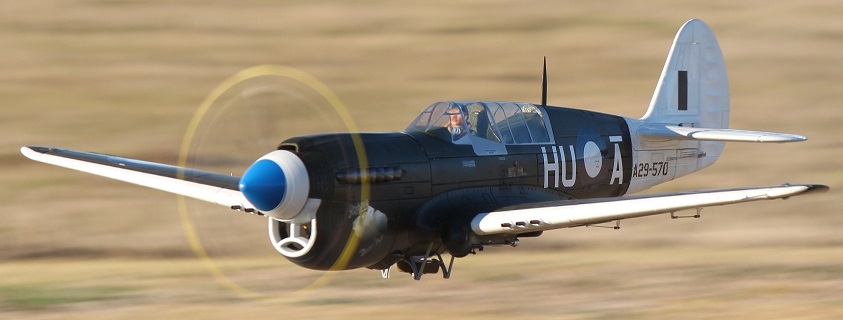
Another of Robert’s models has an impressive 1.7m wingspan and is painted as the Kittyhawk “Stormy Weather” (HU-A) flown by Gordon White in New Guinea (and in which he lost his life in August 1944 when hit by Japanese ground-fire). Gordon previously had a distinguished tour with 3SQN in North Africa. [Both photos by Rob's 8-year-old daughter, Bronte.]
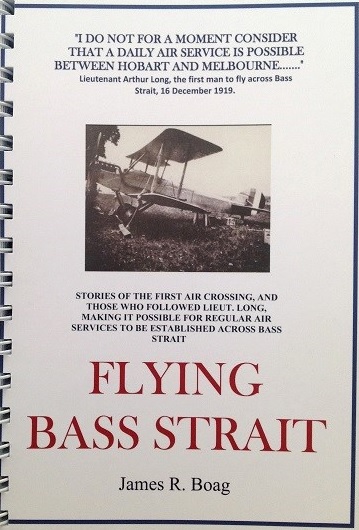
Readers who enjoy the occasional beer may recognise the brand-name “James Boag” (a well-regarded Tasmanian boutique drop). If so, you can imagine our surprise when we received an email from a modern-day James Boag. (Yes, he does happen to be a direct descendent of the famous brewer.) More importantly, James has recently written a book called “Flying Bass Strait”. This is a tribute to all the early aviation pioneers who made that perilous journey, including some 3 Squadron boys who in 1937 made a “major” - but quite unintended - contribution to this country’s aviation heritage, as related in our newly-added Story about the incident.
Vicki Crighton writes: I really enjoyed attending the ‘CENTENARY OF MILITARY AVIATION’ air show at Point Cook [March 1st, 2014]. Click for Vicki's full report.

Mike Ryan has made contact from the New England region of NSW with information that we have used to update our WW2 Roll of Honour. He has long been interested in the fate of his great-uncle Sgt Fred Ryan, a 3SQN Kittyhawk pilot who went missing in the desperate “Cauldron” battle of mid-June 1942 in Libya. Unfortunately Fred’s fate was never officially determined (despite a misleading statement to the contrary by the author of the biography of Squadron Leader Nicky Barr). The best we can discern is that Fred’s Kittyhawk may have been damaged by flak and then finished off by a German Me109. None of Fred’s personal effects seem to have been returned to Australia – probably due to the chaos of the ‘big retreat’ that occurred on the day following his death. Mike has also had the RAAF file of Pilot Officer Ross Biden digitised for public viewing. Ross was killed on that same day, leading Fred’s mission. It was Ross’s third strike of the day and his Kittyhawk suffered engine failure just after take-off. The bomb that Ross was carrying then exploded when he attempted to force-land.
“Dusty” Lane’s family in Victoria have been trying to track down an original 1945 “Operation Bowler” report that Dusty sent up to the Association in NSW in the 1990s. (Describing the spectacular 1945 attack on Venice Harbour, copy shown from p79 of this NAA file.) We’ve had no luck, so far, finding the original, despite an extensive search, but if anyone reading this can help, please contact us.

Cervia, Italy. 1945. Flt Lt "Dusty" Lane of Macorna, Vic, a
pilot of No. 3
Squadron RAAF in northern Italy.
This squadron has been giving invaluable close support to the Eighth
Army
in it is devastating drive against the fleeing Germans.
Flt Lt Lane was previously a member of No. 451 (Spitfire) Squadron
RAAF.
He later became a chief pilot with Ansett. [AWM MEA2243]
John Love has sent in a great video link: “Bristol Boxkite replica test-flight at Point Cook, VIC.”
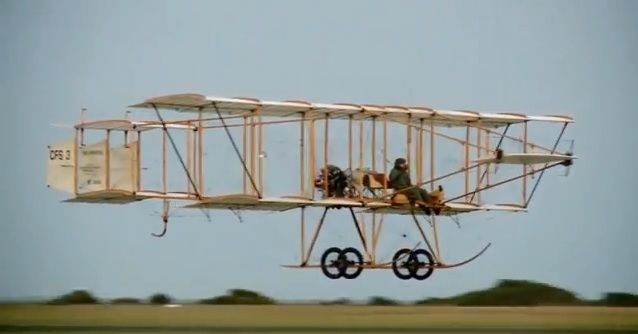
It’s very evocative of the infancy of flight. – The 1st of March 2014 marked the 100th Anniversary of Captain Eric Harrison’s initial take-off, at Point Cook, in Bristol Boxkite CFS-3; the first-ever flight of an Australian Military aircraft.
The pic below shows Henry Ralfe at the controls of the original Point Cook Boxkite.
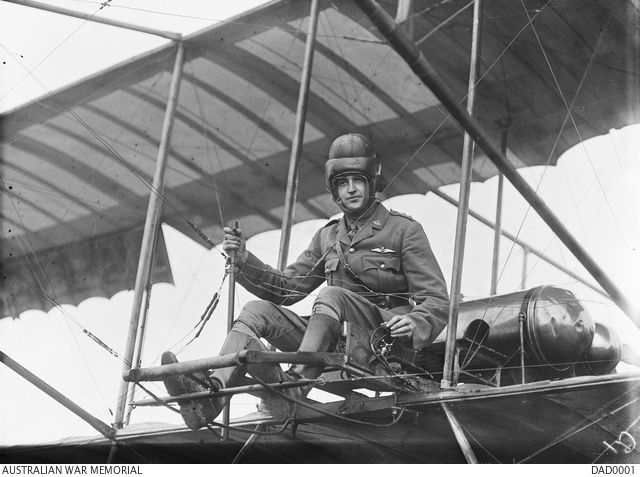
- Henry was killed in action with 3AFC on 6/5/18. There’s a passage about him in our Jack Treacy web-page, where Jack recalled a photographic patrol of the morning of 6 May, 1918:
"Captain Henry Ralfe was patrolling the sector adjoining me and there was a low mist at about 3,000 feet and thin. I could see Ralfe in his sector doing his work. Then I saw a bunch of Huns above the mist - they wouldn't attack you under the mist for, although slow, the RE8 was pretty hot stuff and would fight off two or three of them [German fighters] sometimes. But they broke through the mist and Ralfe was attacked by five German machines over Morlancourt Ridge. The RE8 went down in flames and buried itself 15 feet in the soft ground of the Somme, but Lieut. W. A. J. Buckland, the gunner, jumped out rather than burn. It was a bad show not having parachutes in those days, but the idea was we’d jump if we had to..."
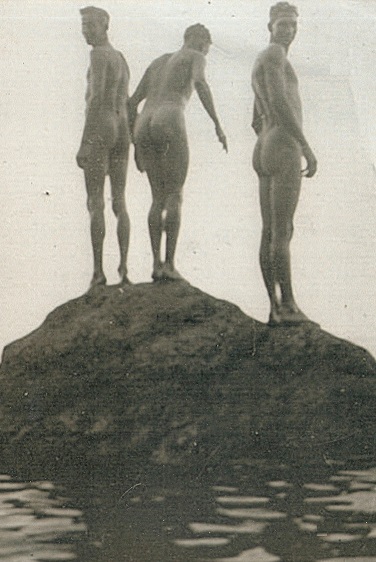
From Shirley Bear, another great photo from exactly 70
years ago at Agnoni in Sicily.
This one was taken by official photographer Lawrie Le Guay and shows
Alex “Choom” Billett, George Walsh and “Grizz” Bear.
Shirley’s caption: “Two Mermaids and
One Bear Bum”. (Shirley is
not quite sure if Lawrie was clothed or not at the time! Well,
the Mediterranean does look rather inviting in that hot Sicilian
summer…)
Mustang pilot Arthur Pardey has told us that he “could not put down” the transcript of Alan Righetti’s 2003 interview with the video crew from Veterans’ Affairs. It is indeed an amazing story of African air battles and Alan’s fraught experiences as a Prisoner of War. To make this interview available to more readers, we have published quick Internet links for all of the 3SQN Veterans’ interviews on our “Research” web-page, and Alan’s interview in particular has been specially reformatted, so that readers will easily find it when searching our website.
A reader from Ontario, Canada, named Alex Norton, has commented on Tom Russell’s excellent “Sergeant Pilots” article on our website, which mentions the Empire Air Training Scheme and that 3,724 Australian pilots (including several who later served in 3 Squadron) did their training in Canada between 1940 and 1945. “By the conclusion of the war, over 167,000 students, including over 50,000 pilots, had trained in Canada,” Alex adds. - An impressive total!
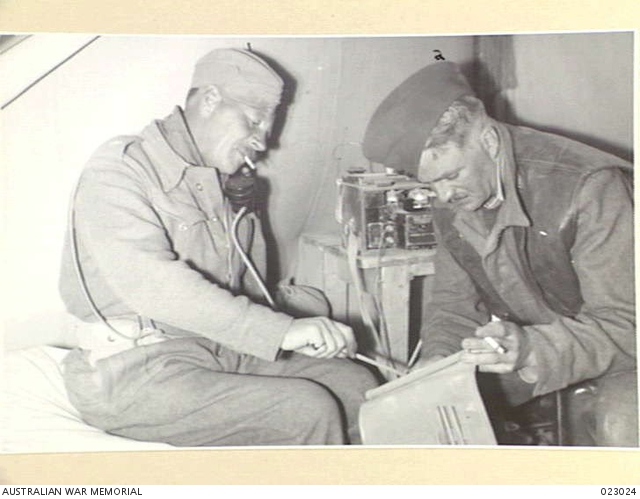
[Left] Libya. 1942-01-02. Major
A. Binnie, Liaison Intelligence Officer attached to No.3
Squadron RAAF, with the Commanding Officer Squadron Leader Dixie
Chapman. [AWM 023024]
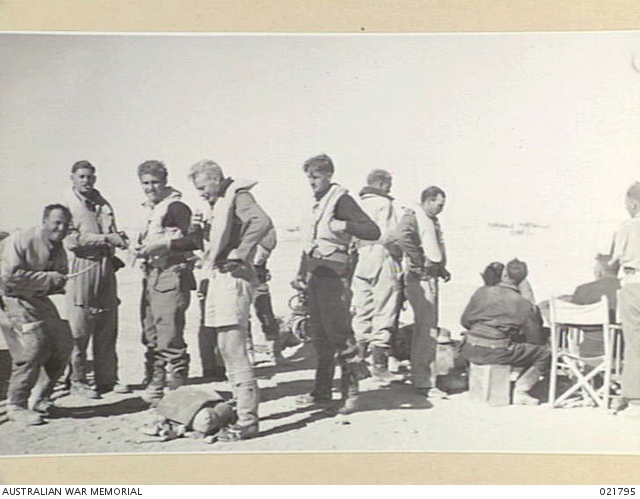
[Right] Fighter
pilots of 3 Squadron, RAAF, stand by to receive final instructions
before taking off on an operation flight. Filled water bottles
and revolvers are part of their equipment.
Identified are: (far left is) 260714 Flying Officer (FO) Robert Henry
Maxwell (Bobby) Gibbes; (sixth from the
left) 404085 Flight Lieutenant (Flt Lt) Allan Cecil (Tiny) Cameron;
(third from the right, seated) O35436 (145) Wing Commander Peter
Jeffrey. [AWM 021795]
Some fascinating information about one of 3 Squadron’s Intelligence officers from 1941/42 has come up through an email from Wing Commander David Glerean, part of a team organising the 50th Anniversary of the RAAF Intelligence category for September 2013. A 46-year-old Australian Army Major named Alan Binnie was the Squadron’s ‘Air Liaison Intelligence Officer’ in Egypt and Libya in 1941. He was a very popular member of the team and had been awarded a Military Cross after flying air combat with the RAF in WW1 – when famously his left arm had been removed by Lothar von Richthofen, the Red Baron’s brother!
Binnie’s WW2 Army medical form is astounding: “Fit for Class One except for missing left arm…” (Ah, those were the days!) Subsequently his 3SQN Intelligence briefings were always given with the aid of a small pointer. (Bobbie Gibbes can be even be seen imitating Binnie’s distinctive stance (including pointer!) to the amusement of the other pilots, in AWM photo 021795.) Sadly, Binnie was killed in a frontline air crash in New Guinea in 1945 as an Air Liaison Lieutenant-Colonel.
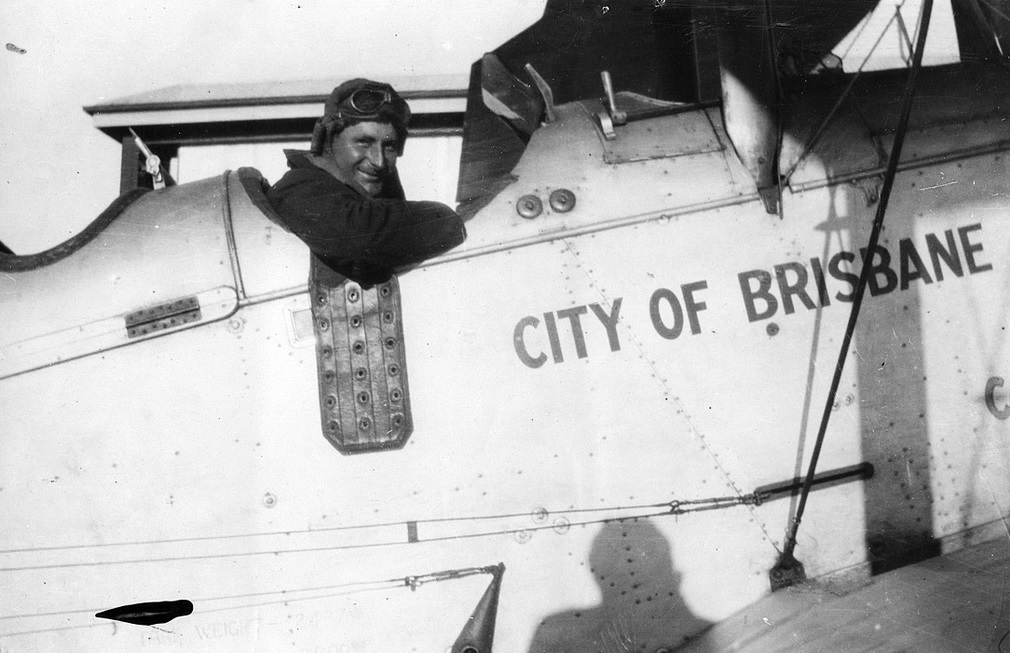
Sally Douglas sent in a photo of Captain Charlie Matheson, who had been responsible for one of 3AFC’s first several victories on 25 January 1918, when he shot down one of two German two-seaters that had attacked him. He was promoted to Captain and Flight Commander in 3AFC from October 1918. He later became a pioneering aviation figure in Australia and was photographed sitting in the "City of Brisbane" in 1927 after achieving a record flight time from Sydney to Brisbane.
A short note re the rhyming-slang expression: “On your Pat Malone” – for “On your own”. This term became popular in Australia in the years before World War I. ‘Pat Malone’ was a character in a popular song of the 1890s, who pretended to be dead in order to claim insurance money. - But then Pat had to take drastic action when his friends tried to bury him! [National Library TROVE data.]
Some good news from the Parliamentary Secretary for Defence –
“Members of the Royal Australian Air Force (RAAF) who were posted to Thailand’s Ubon Air Base between 25 June 1965 and 31 August 1968 are now finally eligible for the Vietnam Logistic and Support Medal.”
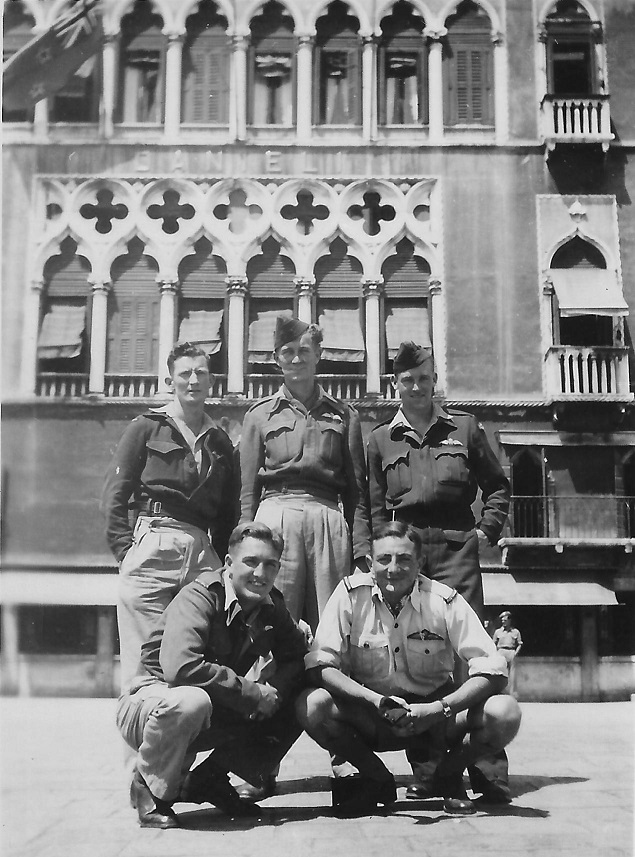
Elizabeth McDonald, the daughter of Mustang pilot Leo McDonald, has sent us a nice picture of the some of the boys in Venice just after the end of WW2. Back: [from left] Leo McDonald, John Boyd, Bill Borthwick. Front: Charley Scarff and Bill (Arthur) Pardey.
Jennifer Smith wrote: “I am the daughter of Walter John Wray (RAAF A3952). Date of Enlistment 15 March 1937, Richmond, NSW. Warrant Officer at date of discharge, 17 March 1961, after 24 years’ service. I have a July 1970 ‘3 Squadron News’ amongst Dad's things and thought I would contact you after having looked at the site for 2 hrs. I would appreciate any information you may have (good or bad) of Dad. All I have of his time in the Middle East is a photo of him leaning on a palm tree. (Looking very good if I may say so.) I have also just returned from visiting my Grandfather’s grave at Martinpuich, France, which was a most wonderful experience.”
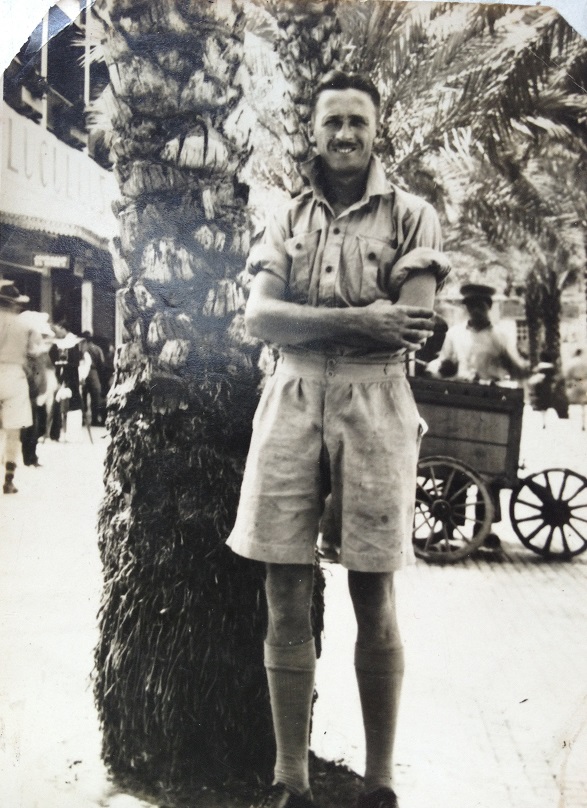
Walter Wray.
We confirmed that Walter was listed in the Personnel Appendix of “3 Squadron at War” and helped Jennifer to open his file in the National Archives; a 160-page treasure-trove, with mugshot photos and many other interesting details. Walter was one of the 3SQN’s Richmond “Originals” who departed for the Middle East on 15 July 1940. He was the more senior of only two Fabric Workers on the Squadron. (They maintained the fabric-covered biplanes and also the pilots' parachutes. Walter is shown as a Corporal, with Service No. 2730. His subordinate was LAC E. N. Carter.) Walter was with 3SQN from 17/4/39 to 7/8/42, serving in Egypt, the first Libyan advance and retreat 1941, Syria 1941 and the 1941/42 Libyan campaigns. He received excellent character assessments throughout. He stayed in the Air Force after the war and, interestingly, transferred back to 3SQN in Canberra on 8/3/48.
The saga of the ancient BE2E propeller in Queensland has been getting even more interesting. The owner of the prop, Bob Jones (who retrieved it from a Qantas rubbish pile), has linked it with Qantas’s original second aircraft, flown by its famous founders. The Qantas history “The Defeat of Distance” shows that BE2E being bought from the Perdriau Rubber Company (later Dunlop Australia), which had imported two BE2Es for publicity-attracting sales flights. The BE2E, registered G-AUBF, made the first one-day flight from Sydney to Brisbane and its original British military serial was C6986. It had been built in Dumbarton, Scotland and was with Qantas for nearly six years. The joke in Qantas was that its registration stood for “Get Away You Bloody Fool”…
Val St Leon sent in some nice photos of the intact 260 Sqn (RAF) Kittyhawk, HS-B, lost in mid-1942 and discovered last year in the Egyptian desert. The remains of its British pilot, F/Sgt Dennis Copping of the RAF, have now been located a few kilometres from the crash site. (The photos are very evocative of the desperate British retreat in mid-1942 and a sad monument to the wastage of war...)
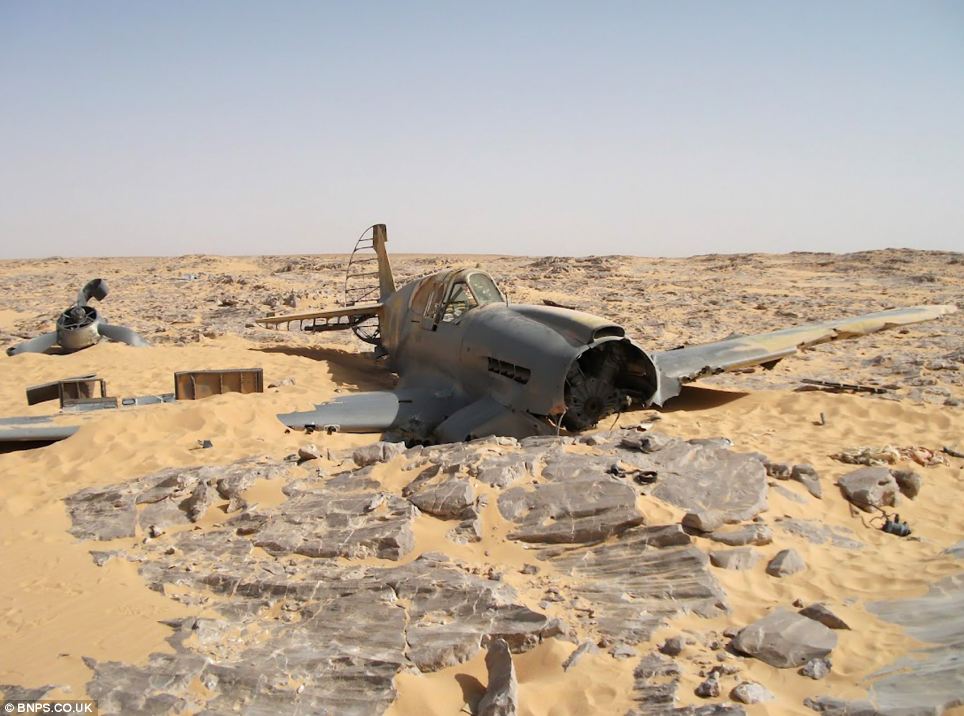
The amazing mummified Kittyhawk from 1942.
Ex-Flight Lt. Mark Compton has written from the icy fjords of Norway: “Hi Vicki, I’m interested in membership of 3 Sqn Association, having served as a Mirage III pilot in Butterworth during 1980-81. I’ve only just found the website after a referral from other members of the 77 Sqn Association, where I’m also a member. I've been living in Norway since '93, so it isn't so easy to keep in touch!”
- Welcome Mark! (We have put him in touch with our ‘nest’ of Mirage-fanciers in QLD.)
Shirley Redman (Grizz Bear’s daughter) has sent in a great photo and story:
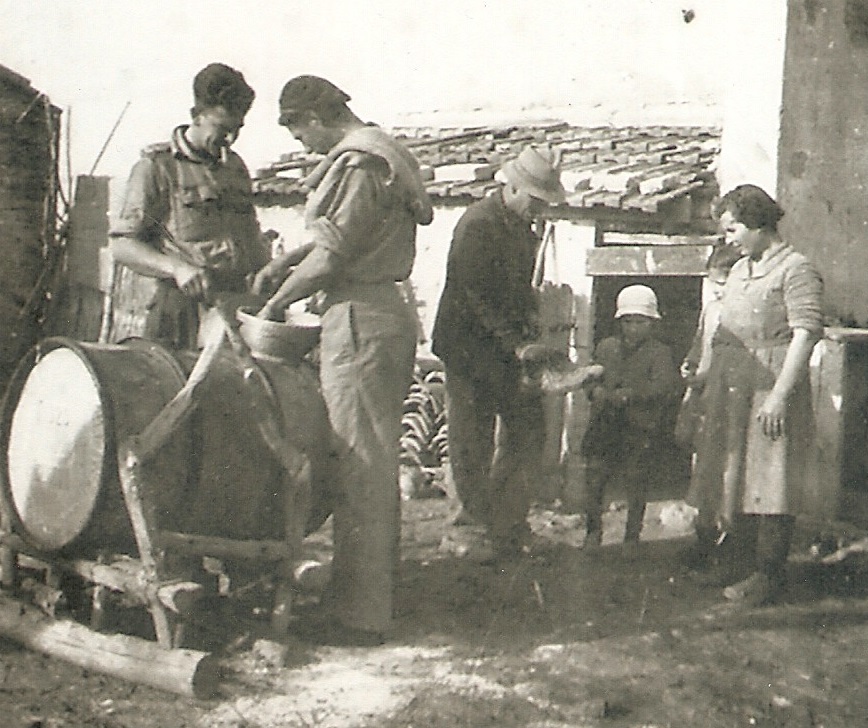
Photo shows Grizz and Ocker (Gordon Stephens), selling
Laurie Coolahan’s new boots to a local farmer, in return for eggs, at
Cutella, Italy. They’d acquired the boots from under Laurie’s
bed.
- A couple of days later, Laurie asked as to the whereabouts of his
boots… Grizz and Ocker answered that they’d, “eaten them for
tea!”
(The eggs of course, not the boots, but Laurie wasn’t to know
that…)
Rebecca Mahoney writes:
Thanks for the newsletters you send - we always read them. My connection with 3 Squadron is my uncle, FO William (“Bill”) Diehm; KIA Jan, 1943. Thanks also for putting Bill's photo on the website. I know the photo well, I think it was taken outside the family home in Academy Street in Lithgow. He looks startlingly like my brother.
In the deep, dark past, I studied history at Sydney University and I remember one of my lecturers making the point that a lot of historical sources that inform "official" histories come from family records originally. People who die young without marrying and/or having children often "fall off" family trees and their history becomes lost. The point was being made in relation to convicts who died in the early colony as young single people - no-one was tracing them in genealogies or recording their histories because they didn't have descendants to do it.
Many years later, it struck me that the same would eventually happen to Bill. That's why I make sure that his story is passed on to my son and nieces. The 3 Squadron Association website is absolutely invaluable for putting the personal stuff that I learnt from my Dad into a context. There's no way we would be able to know so much about what happened once he left Lithgow without the work you do. It is really appreciated. I'm in London at the moment and was in the Church of St Clement Danes today - the RAF Memorial church. I bought a music CD which I will to send to Tom Russell, who was a friend of my uncle and was very kind to our family after Bill was killed.
[The beautiful church of St Clement Danes, on The Strand in London, was originally suggested as Memorial to the R.A.F. and Commonwealth Air Forces by a former 3 AFC WWI veteran, Henry Wrigley.]
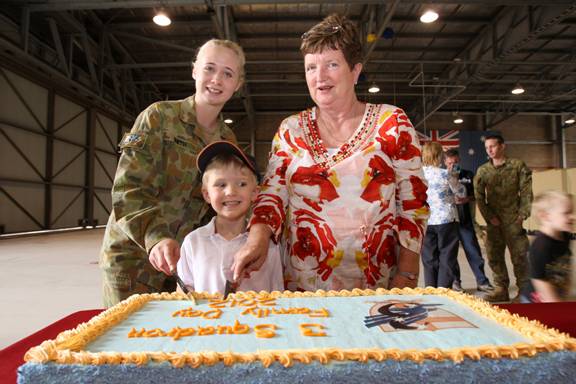
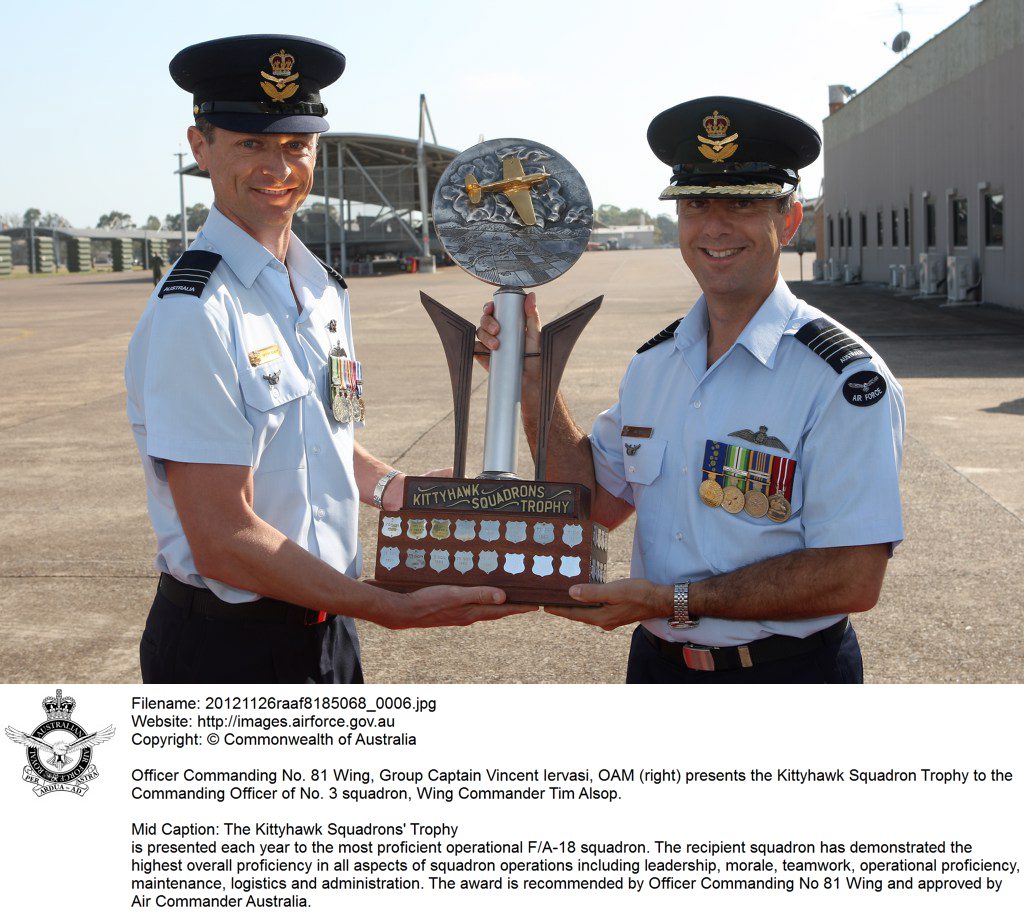
Nerita Lewis, the Squadron’s Admin Officer at Williamtown, has sent in a lovely photo of the delicious 3SQN cake from the December 2012 Family Day. Our Secretary Vicki Crighton made a flying visit to the Morning Tea on behalf of the Association. The photo above shows Vicki [right] and grandson Lucas, with the Squadron's youngest serving member. Awards were presented to serving personnel for their achievements over the past year, as well as service medals and the Kittyhawk Squadrons’ Trophy, which the Squadron won again this year. (Adding to their ‘wins’ in 2007 and 2008 – well done team!)